
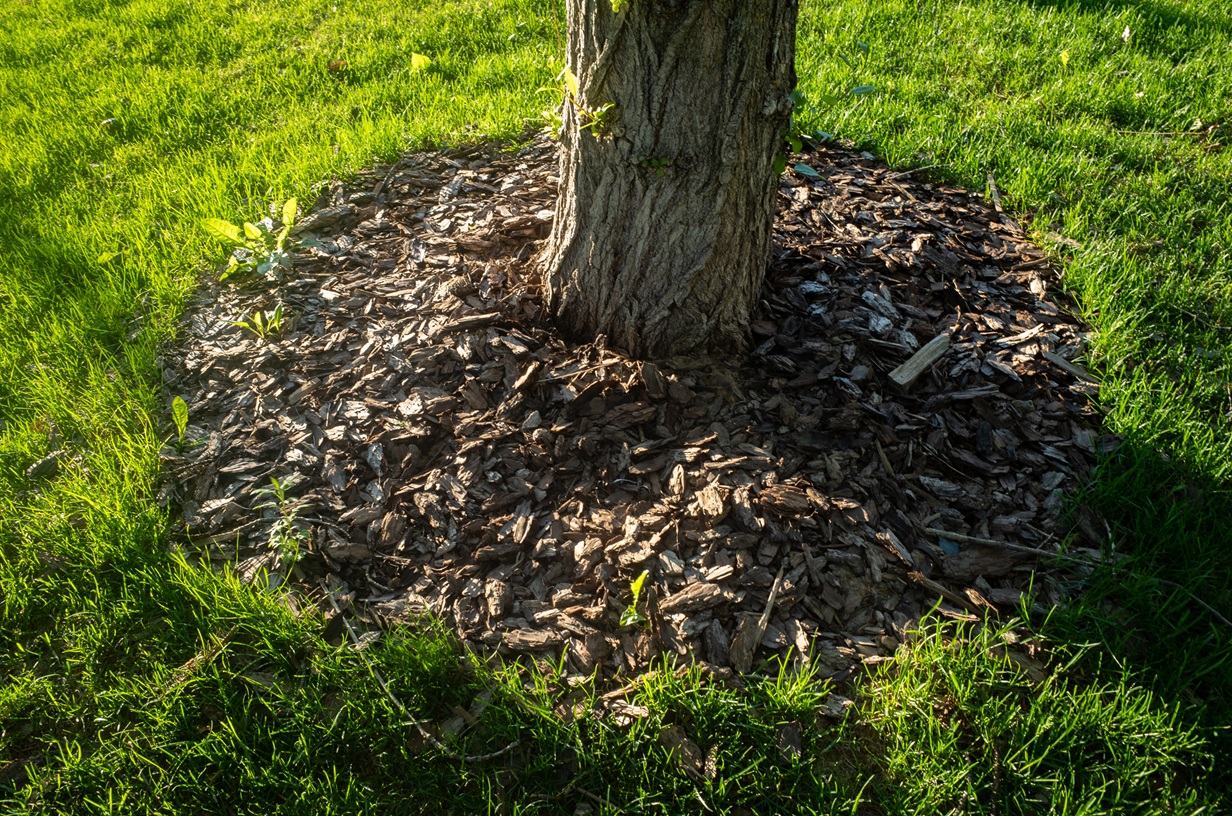
Here are some mulch tips that help protect fresh sod.
If you just put in a new yard, chances are you have areas for flower beds in addition to all that beautiful new sod. Neatly mulched flower beds are an attractive addition to any landscape, and mulch offers a wealth of additional benefits to flowers, bushes, and trees. Mulch helps retain soil moisture while it suppresses many weeds.
You must take care when you add mulch to newly built flower and garden beds. The wrong mulch techniques may harm new sod. Here are some mulch tips that help protect new sod.
Use Chemicals Sparingly
Mulch is great at suppressing weeds, but it cannot eradicate weeds that have already taken root in your soil. When you prepare a bedding site for plants and mulch, you must first remove all weeds.
Sometimes, you can simply rake the surface to till the soil and uproot any weeds, or pull them by hand. You can also use pre- and post-emergent herbicides that kill existing weeds and prevent the germination of weed seeds already within the soil.
Use both types of herbicides with care so they do not come in contact with your new sod. Over-spray can drift onto new grass and kill portions of it. You might want to consider a selective herbicide that does not harm grass. Instead, they target broad-leafed weeds only and won’t hurt your lawn due to accidental contact.
Prevent Mulch Erosion
Mulch is not useful if it cannot stay put in a bedding area. Irrigation, rain from storms, and even wind can move mulch out of place and into adjacent areas, such as pathways, driveways, and your new sod. Mulch can be destructive to delicate new sod that has not yet established strong new roots. The careless or repeated removal of stray mulch with a rake may damage new sod.
Additionally, mulch that leaves bedding areas can harm existing lawns and leave bedding areas vulnerable to further erosion.
As you plan garden areas alongside new sod, take steps to prevent mulch from eroding onto your lawn. One easy method to control erosion is to simply contain the mulch. Many gardeners like to use landscape-edging materials, concrete dividers, or rustic stones to keep the mulch in place
Don’t Over-Mulch
After landscape beds are weed-free and properly edged, add the right amount of mulch. Mulch levels are important because too little mulch does not suppress weeds and can lead to dry soil. If you can still see soil, add more mulch. The right amount of mulch is between 2 and 4 inches deep. Keep mulch several inches away from tree trunks.
However, gardeners make the mistake of adding too much mulch to beds or piling it around trees. Over-mulching affects soil pH, depletes soil nutrients, and introduces diseases such as root rot. Worse, too much mulch can create new habitats for pests.
Rodents often burrow into deep mulch, and many insects are attracted by the perpetually damp conditions of deep mulch. Pests like these can harm sod grass not yet strong enough to repel infestations.
Get Your Yard Ready for Spring!
Since our inception from a humble 30-acre field to over 4,500 acres of turf grasses, Quantico Creek Sod Farm is now the LARGEST SOD FARM IN THE TRI-STATE AREA. Our service areas cover Pennsylvania, Maryland, DC Delaware, Virginia and Northern North Carolina. Order early and order often to ensure the best service possible. Contact us through our online page. Please find us at 27616 Little Lane, Salisbury, Maryland 21801. Our phone number is 410-726-6103, and our fax number is 410-742-6550. Speak to Jason Anderson for Turf Grass Sales. Reach him by email at jason@quanticocreeksod.com. Finally, follow us on social media on Facebook, LinkedIn, and our blog.